Awareness
Extreme Weather Events: A Growing Threat to Sri Lanka's Biodiversity and Ecosystems
Prof.Siril Wijesundara
Published on Tue, 06/30/2026 - 14:21
blog
Sri Lanka, despite its small geographical size, is recognized as one of the world's most significant biodiversity hotspots. Its extraordinary wealth of endemic plants and animals, diverse ecosystems ranging from tropical rainforests and cloud forests to dry-zone forests, wetlands, mangroves, and coral reefs, makes the island globally important for biodiversity conservation. However, this unique natural heritage is now facing unprecedented threats from climate change and the increasing frequency of extreme weather events.
Over the past few decades, Sri Lanka has experienced rising temperatures, increasingly erratic rainfall patterns, prolonged droughts, intense floods, devastating landslides, heat waves, cyclones, and recurring El Niño events. These climatic extremes are no longer isolated incidents but are becoming regular features that profoundly influence ecosystem structure, species survival, and ecological processes.
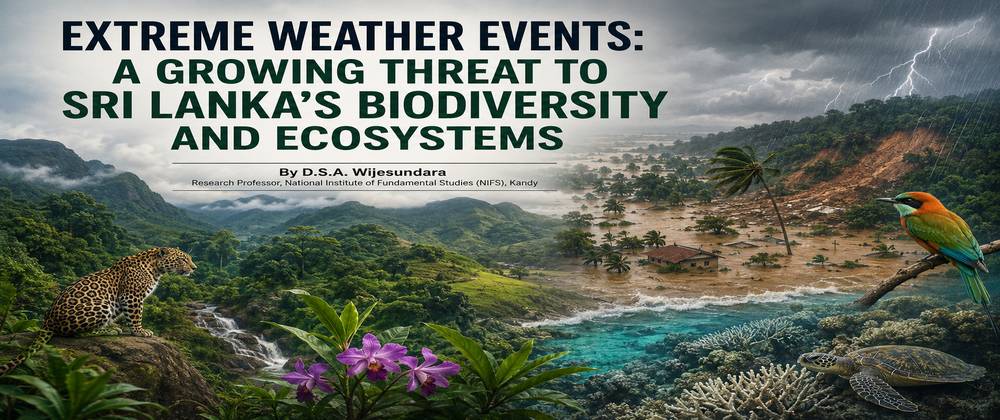
The severe floods and widespread landslides experienced during late 2025 highlighted the vulnerability of many of Sri Lanka's biodiversity-rich landscapes. Numerous forests, river systems, and mountain ecosystems suffered extensive damage. While human impacts received considerable attention, the often-overlooked consequences for biodiversity were equally alarming. Many localized populations of plants and animals occupy extremely restricted habitats, and a single landslide or flood can eliminate an entire population, pushing rare species closer to extinction.
Sri Lanka's endemic-rich regions—including the Central Highlands, South-Western Wet Zone, Northern Highlands, Eastern Highlands, Ritigala, Dolukanda, Yala, Wilpattu, and Jaffna—represent irreplaceable centres of biological diversity. Within these, internationally renowned areas such as Sinharaja, Adam's Peak, Knuckles, Horton Plains, and the Kandy region harbour exceptionally high concentrations of endemic plant species found nowhere else on Earth. Protecting these ecosystems is therefore not only a national responsibility but also a global conservation priority.
Climate change is already transforming the composition and functioning of Sri Lanka's forests. Rising temperatures and altered rainfall regimes are affecting flowering, fruiting, seed production, and natural regeneration. Extended droughts increase seedling mortality and water stress, while floods and landslides cause severe soil erosion, habitat destruction, and sedimentation of freshwater ecosystems. Coral reefs are increasingly affected by bleaching events, while mangroves and coastal ecosystems face additional pressure from sea-level rise and coastal erosion.
Particularly concerning is the growing interaction between climate change and biological invasions. Disturbed ecosystems become increasingly susceptible to invasive alien species, many of which were originally introduced during the colonial period. As forests weaken under climatic stress, invasive plants establish more rapidly, displacing native vegetation and altering ecosystem processes. Even some indigenous species are beginning to exhibit invasive behaviour under changing environmental conditions. Recent observations from forests such as Indikada Mukalana, Meethirigala, and Horton Plains demonstrate how native species can become aggressive colonizers, fundamentally altering natural vegetation dynamics.
The conservation outlook is deeply concerning. Current assessments indicate that nearly half of Sri Lanka's flowering plant species are threatened with extinction, while almost sixty percent of endemic flowering plants and approximately two-thirds of endemic fern species are considered threatened. Several species have already become extinct, while many others survive only in cultivation or are believed to have disappeared from the wild.
The consequences extend well beyond biodiversity alone. Healthy ecosystems provide essential services that sustain society, including clean water, carbon sequestration, pollination, soil protection, food production, tourism, and climate regulation. As ecosystems degrade, these invaluable services decline, directly affecting agriculture, fisheries, rural livelihoods, and national economic resilience.
Addressing these challenges requires a comprehensive approach that integrates biodiversity conservation into national climate adaptation strategies. Strengthening protected area networks, restoring degraded ecosystems, conserving climate refugia, controlling invasive species, and investing in long-term ecological monitoring and scientific research are essential priorities. Equally important is the development of effective early-warning systems and evidence-based environmental policies capable of responding to increasingly unpredictable climatic conditions.
The protection of Sri Lanka's biodiversity should not be viewed solely as a conservation issue. It is an investment in the country's environmental security, economic sustainability, and the well-being of future generations. Conserving biodiversity is one of the most effective nature-based solutions available for adapting to climate change and building a resilient nation.
As extreme weather events become more frequent and intense, safeguarding Sri Lanka's extraordinary natural heritage has never been more urgent. The choices made today will determine whether future generations inherit ecosystems that continue to thrive—or merely the memory of what has been lost.